
What Is Proof of Keys?
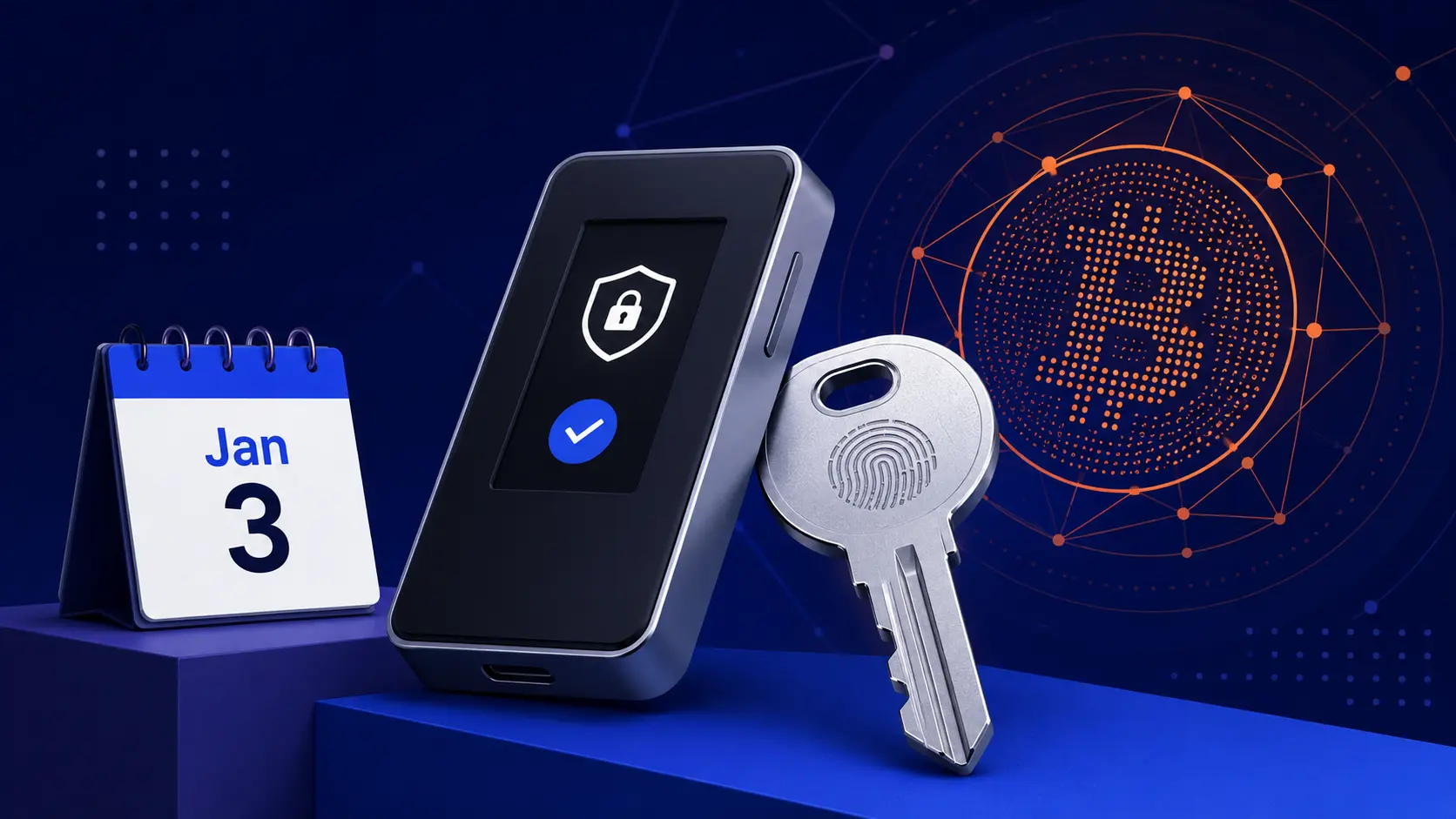
Proof of Keys is a yearly event, held on January 3rd, where cryptocurrency holders withdraw their coins from exchanges and move them into wallets whose private keys they personally control.
The event was created by Trace Mayer, a cryptocurrency investor and host of a long-running Bitcoin podcast. He launched the first Proof of Keys on January 3, 2019, to mark the tenth anniversary of Bitcoin and to make a point about ownership. His argument was straightforward: if you cannot withdraw your crypto on demand, you do not really control it.
The exercise tests two things at once. First, it checks whether an exchange actually holds the coins it claims to hold, since a platform can only process withdrawals if the funds are really there. Second, it confirms that a user's coins are intact and have not been frozen, lost, or misused. When many people withdraw on the same day, weak platforms can struggle to keep up.
Interest in self-custody is not a fringe idea in Canada. The Bank of Canada found that around 10 percent of Canadians owned Bitcoin in 2023, with a median holding worth about Can$500 [Source]. That is a meaningful number of people trusting platforms with real money. If you are still learning the basics, our guide on how to buy Bitcoin in Canada is a good place to start before you think about storage.
Not Your Keys, Not Your Coins: What It Really Means
"Not your keys, not your coins" means that whoever controls the private keys to a wallet controls the crypto inside it, regardless of whose name is on the account.
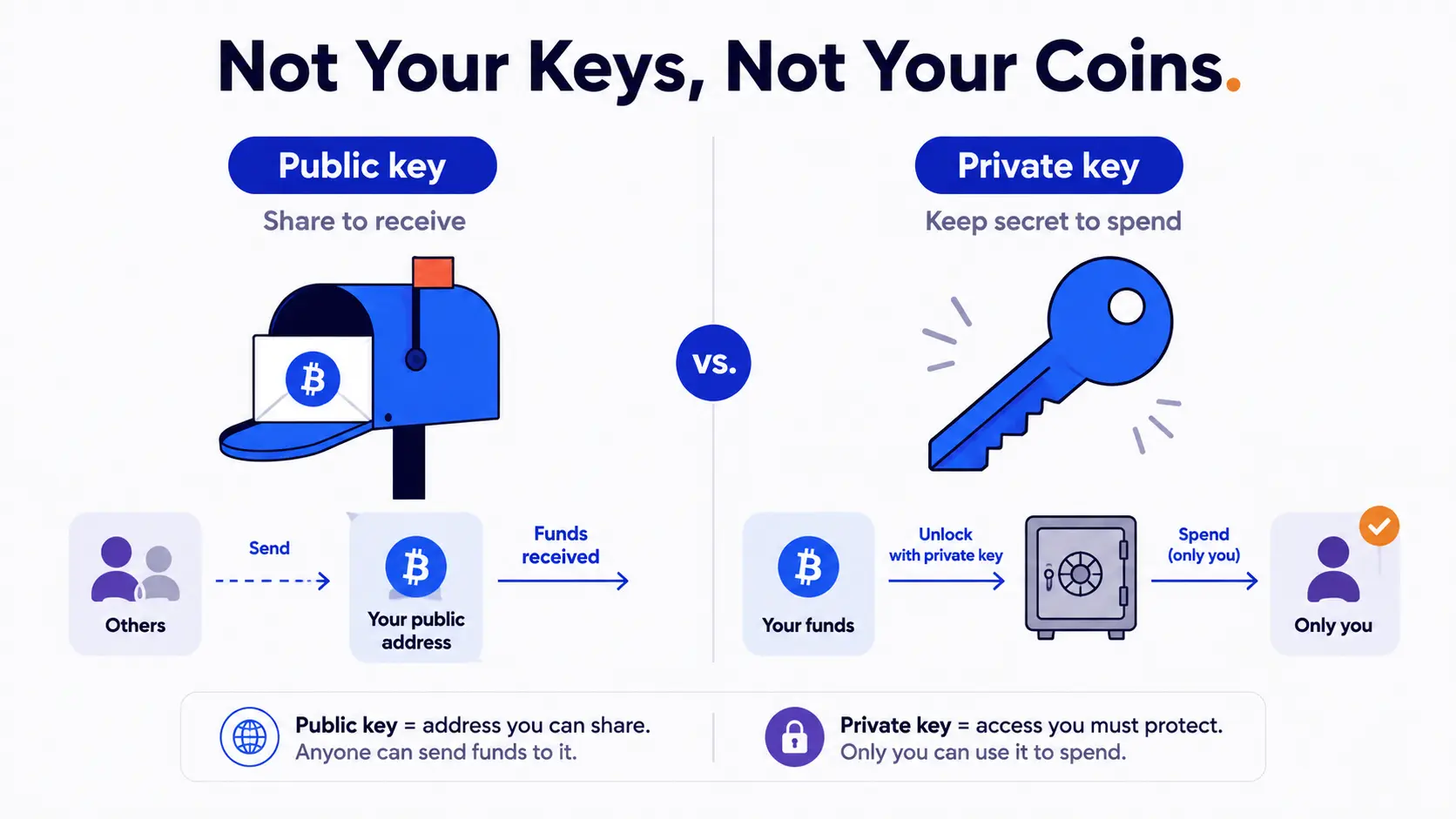
To understand the phrase, you need two ideas: public keys and private keys. A public key is like an email address you can share so others can send you crypto. A private key is like the password that lets you spend it. Whoever holds the private key can move the funds. If someone else holds your keys, they hold your money.
When you buy crypto on an exchange and leave it there, the exchange usually holds the private keys, not you. Your balance on the screen is really a promise from the platform to pay you back on request. In most cases that promise is honoured without issue. The risk appears when a platform fails, freezes withdrawals, or turns out to be dishonest.
Self-custody flips this arrangement. You hold the private keys yourself, typically through a personal wallet, so no company sits between you and your coins. This gives you more direct control, and also full responsibility. There is no help desk to call if you make a mistake. To understand the technology underneath all of this, see our explainer on what a blockchain is.
Understanding is still uneven. The Bank of Canada reported that 40 percent of Bitcoin owners in 2021 showed a low level of knowledge about how it works [Source]. For a Toronto or Calgary investor holding real savings, that knowledge gap is exactly what self-custody habits are meant to close.
Why January 3rd? Bitcoin's Genesis Block
January 3rd was chosen because it is the birthday of Bitcoin itself, the day the very first block was created in 2009.
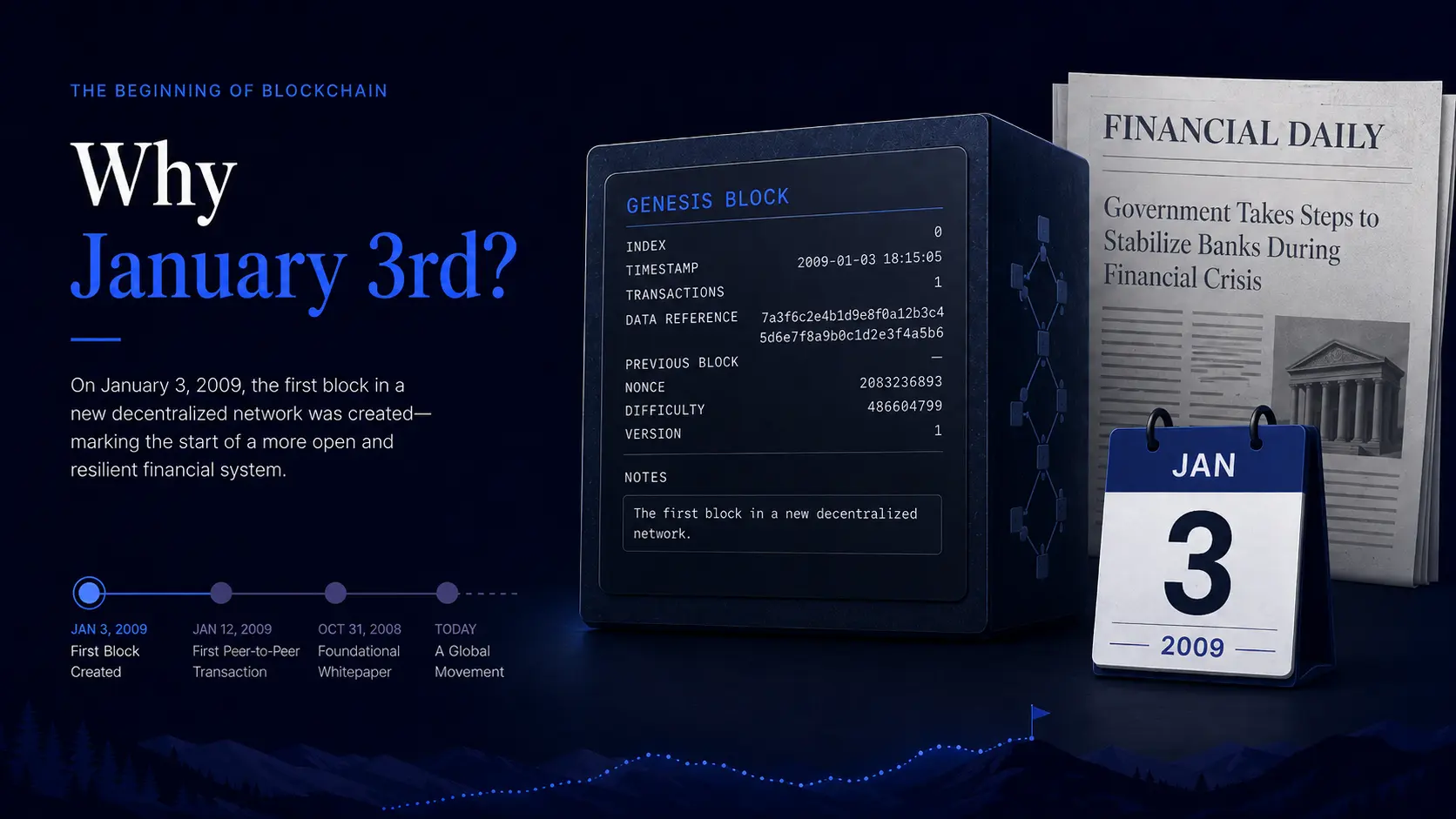
That first block is called the genesis block. It was mined on January 3, 2009 by Bitcoin's pseudonymous creator, Satoshi Nakamoto [Source]. To this day, no one knows for certain whether Satoshi is one person or a group. You can read more in our piece on the Satoshi Nakamoto mystery.
Satoshi embedded a short message in the genesis block. It read: "The Times 03/Jan/2009 Chancellor on brink of second bailout for banks." The line refers to a real newspaper headline from that day about bank bailouts during the global financial crisis. It is widely read as a comment on the fragility of the traditional banking system that Bitcoin was designed to offer an alternative to.
Choosing January 3rd for Proof of Keys ties the practice back to that original idea. Bitcoin was built so that individuals could hold and move value without needing a bank or middleman to hold it for them. Self-custody is the practical expression of that design. Withdrawing your coins on Bitcoin's birthday is a symbolic way of exercising the control the system was meant to provide.
For a Canadian saver who lived through market shocks, the message still lands. It is a reminder that holding an asset directly is different from holding a claim on a company that holds the asset for you.
The QuadrigaCX Collapse: A Canadian Cautionary Tale
QuadrigaCX was once believed to be Canada's largest cryptocurrency exchange, and its collapse became a defining example of why self-custody matters.
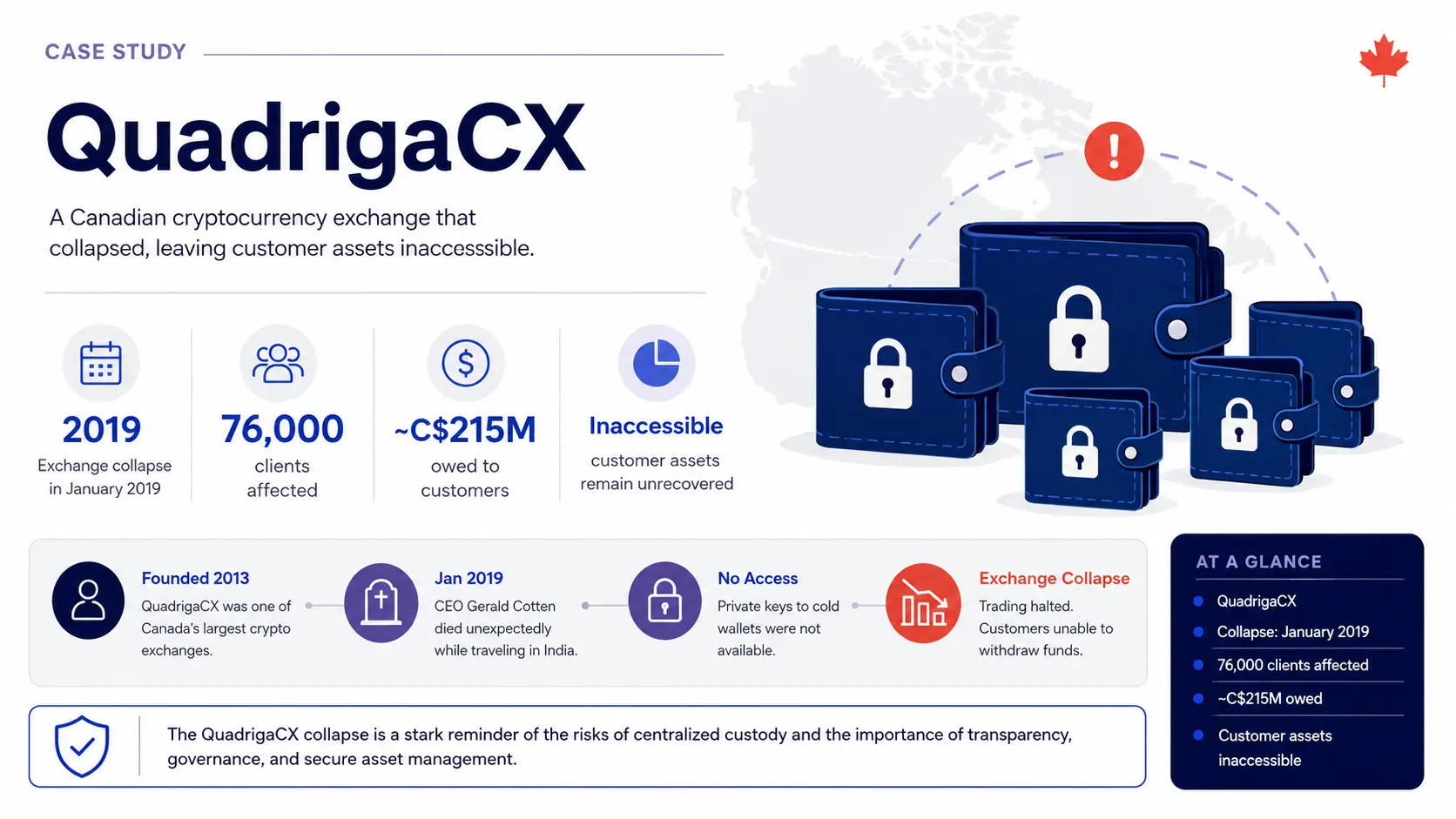
The company unravelled in early 2019. Its founder and chief executive, Gerald Cotten, was reported to have died in December 2018 while travelling in India, with the cause given as complications from Crohn's disease [Source]. Soon after, the platform froze and users could no longer withdraw their money.
The core problem was custody. According to court-appointed investigators, Cotten was the only person who held the passwords to the exchange's offline wallets. When he died, no one else could access them. Around 76,000 users were left owed roughly Can$215 million [Source]. A forensic review later found the cold wallets that were supposed to hold customer crypto were largely empty.
A subsequent investigation into the collapse concluded that the exchange had operated as a fraud, effectively a Ponzi scheme, according to CBC News reporting [Source]. The circumstances also fuelled public speculation. Some affected users questioned the official account of Cotten's death and called for further investigation, though claims that his death was faked remain unproven allegations rather than established fact.
Years later, the outcome for users was painful. Creditors were told they would recover only about 13 percent of what they were owed, based on a 2019 valuation [Source]. The lesson many Canadians drew was simple: coins you do not control can become coins you cannot reach.
Custodial vs Self-Custody Wallets: The Trade-Offs
The main difference between custodial and self-custody wallets is who holds the private keys, and that single difference shapes convenience, control, and risk.
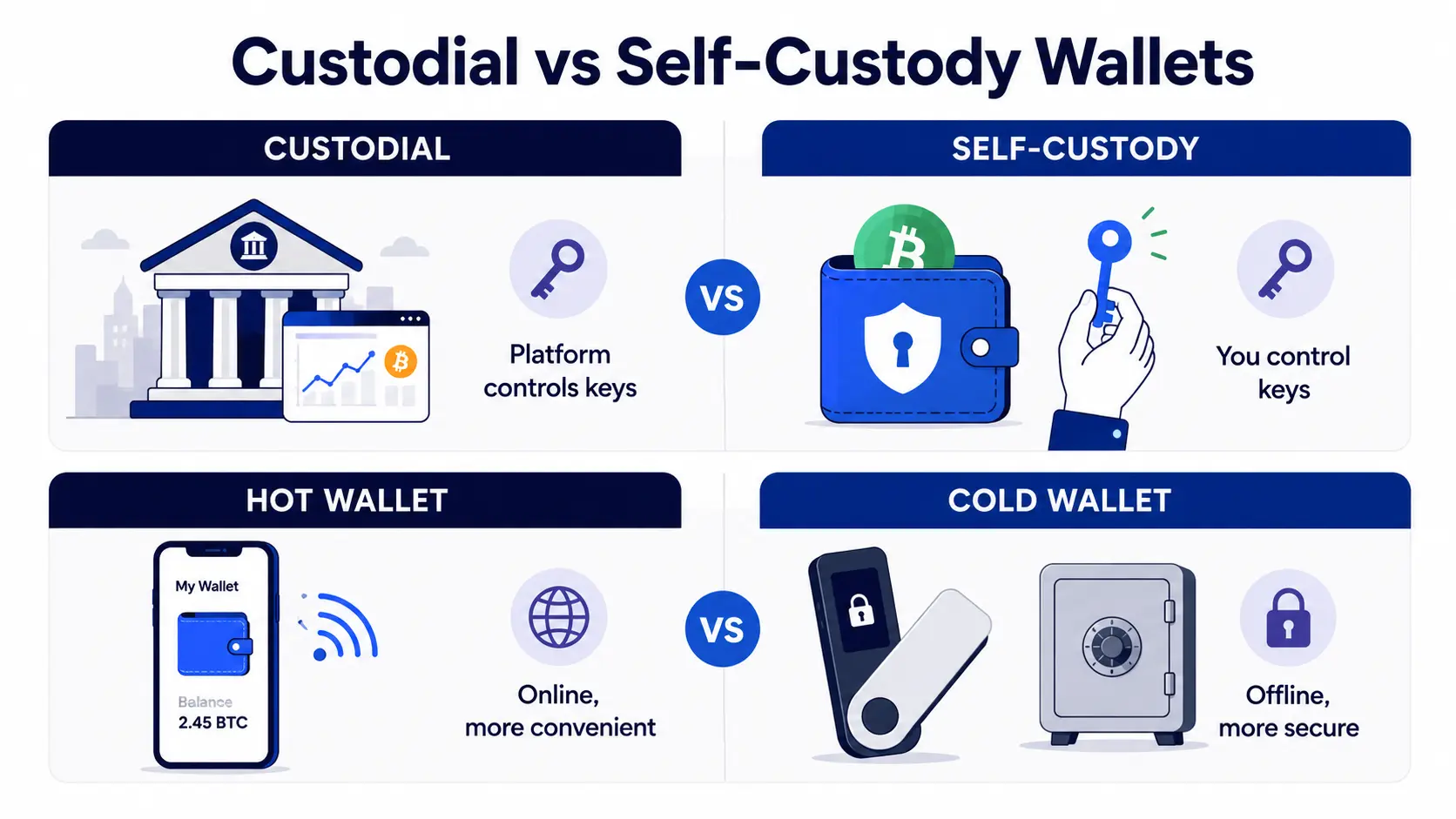
A custodial wallet is one where a third party, usually an exchange, holds the keys for you. This is how most people start. It is convenient, it often allows password recovery, and it makes buying, selling, and trading easy. The trade-off is that you are relying on that company to stay solvent, secure, and honest. When you compare platforms, our guide to comparing Canadian crypto exchanges walks through what to look for.
A self-custody wallet, sometimes called non-custodial, puts the keys entirely in your hands. Within self-custody, wallets fall into two broad types. A hot wallet stays connected to the internet, which is handy for frequent use but exposes it to more online threats. A cold wallet keeps the keys offline, often on a small hardware device, which offers stronger protection but is less convenient for quick transactions.
Neither choice is universally correct. Self-custody reduces reliance on a company but adds personal responsibility. Custodial accounts add convenience but reintroduce reliance on a third party. Many Canadians use a mix, keeping smaller amounts on a registered platform for trading and moving longer-term holdings into cold storage.
It is worth noting that many registered Canadian platforms hold the assets they custody in cold storage. That can reduce some risks but does not change the basic point: while a custodian holds your keys, you are trusting the custodian to stay solvent, secure, and honest. You can read more about how crypto custody is handled.
How to Participate in Proof of Keys
Participating in Proof of Keys is straightforward: withdraw some or all of your crypto from an exchange into a personal wallet you control, then confirm the transfer on the blockchain.
Here is the general process, broken into simple steps:
- Choose and set up a personal wallet before January 3rd. A hardware cold wallet is a common choice for longer-term holdings.
- Back up your recovery details, especially your seed phrase, and store them somewhere safe and offline.
- Log in to your exchange and start a withdrawal to your wallet's public address. Double-check the address carefully.
- Send a small test amount first, confirm it arrives, then move the larger amount.
- Verify the transaction on the blockchain so you can see your coins in your own wallet.
Withdrawals usually involve a network fee, so moving coins is not free. In Canada, many people first funded their accounts using Interac e-Transfer, and the Bank of Canada found that Canadian buyers increasingly rely on mobile apps rather than websites to purchase Bitcoin [Source]. That makes the withdrawal step easy to overlook, which is part of why a yearly reminder exists.
You do not have to move everything, and you can move funds back later if you choose. The point is to build the habit and to confirm, with real proof on the blockchain, that your coins exist and that you can access them. Beginners may want to review our overview of cryptocurrency for beginners first.
The Risks and Responsibilities of Self-Custody
Self-custody gives you direct control of your crypto, but it also makes you fully responsible, and that responsibility comes with real risks worth understanding.
The most serious risk is permanent loss. If you lose your private key or seed phrase, there is no reset button and no company that can recover it for you. The coins may be gone for good. Some Bitcoin is believed to have been lost permanently this way, which is a sobering reminder to back up your keys properly.
The second risk is theft through mistakes. Scammers target self-custody users with fake wallet apps, phishing sites, and messages asking for a seed phrase. No legitimate service will ever ask for your seed phrase. Learning to spot these tricks matters, and our guide to common Bitcoin scams in Canada covers the most frequent ones.
Knowledge gaps make these risks worse. The Bank of Canada found that many owners had a low level of understanding of how Bitcoin works [Source]. Self-custody demands care with backups, device security, and verifying addresses. A single typo in a wallet address can send funds to the wrong place with no way to undo it.
None of this means self-custody is a bad idea. It means it should be approached deliberately. For a Vancouver or Montreal holder, starting small, practising with a test amount, and building good habits is far safer than moving a life's savings on the first try. Responsibility is the price of control.
Proof of Reserves: Holding Exchanges Accountable
Proof of reserves is a method exchanges use to show they actually hold enough assets to cover what they owe their customers.
The concept connects directly to Proof of Keys. Both are about one question: does the platform really have the funds it claims? Proof of Keys answers it from the user side, through mass withdrawals. Proof of reserves answers it from the exchange side, by publishing evidence of holdings, often using cryptographic techniques that let anyone verify the totals without exposing individual accounts.
The QuadrigaCX case is the clearest reason this matters in Canada. Investigators found that the wallets supposed to hold customer crypto were largely empty, and users had no way to know until it was too late [Source]. A meaningful proof-of-reserves system might have surfaced the shortfall much sooner.
Proof of reserves is not a complete guarantee on its own. It shows assets at a moment in time and does not always account for liabilities or borrowed funds. Still, combined with strong custody practices and independent audits, it gives users more insight than a simple account balance on a screen.
For everyday Canadians, the practical takeaway is to favour transparency. Platforms that publish reserve information and use established custody providers give you more to work with than those that stay silent. Transparency does not remove risk, but it does make risk easier to judge before you commit your money.
People Also Ask About Proof of Keys
What is Proof of Keys Day? Proof of Keys Day is an annual event on January 3rd where cryptocurrency holders withdraw their coins from exchanges into personal wallets they control. It began in 2019 and is meant to prove two things: that exchanges actually hold the funds they claim, and that users can access their own coins on demand. The exercise reinforces the principle that real ownership of crypto depends on controlling your own private keys rather than trusting a platform to hold them for you.
When is Proof of Keys celebrated? Proof of Keys is celebrated every year on January 3rd. The date was chosen because it is the anniversary of Bitcoin's genesis block, the first block ever created, which was mined on January 3, 2009. Holding the event on Bitcoin's birthday links the practice of self-custody to the original purpose of the network. Participants can withdraw coins for the day, verify them on the blockchain, and move funds back afterward if they wish.
What does "not your keys, not your coins" mean? The phrase means that whoever controls the private keys to a wallet controls the crypto inside it. If an exchange holds your keys, it effectively controls your coins, and your balance is really a promise from the platform. Holding your own keys through self-custody means no third party holds your coins for you. The saying is a shorthand reminder that leaving crypto on a platform involves trusting that platform to stay solvent, secure, and honest.
Is it safe to leave crypto on an exchange? Leaving crypto on an established, registered exchange is convenient and works well for most people most of the time, especially for active trading. The risk is that you rely on the platform to remain solvent, secure, and honest. History includes cases where platforms failed and users could not withdraw. Many Canadians reduce this risk by keeping smaller trading balances on a platform and moving longer-term holdings into a self-custody wallet they control.
Who started Proof of Keys? Proof of Keys was started by Trace Mayer, a cryptocurrency investor and podcaster. He launched the first event on January 3, 2019, to mark Bitcoin's tenth anniversary and to encourage holders to take direct control of their coins. His central argument was that if you cannot withdraw your crypto on demand, you do not truly own it. The event has since become an informal yearly tradition observed by parts of the crypto community worldwide.
How do I move my crypto off an exchange? To move crypto off an exchange, first set up a personal wallet and back up its recovery details safely. Then log in to your exchange, start a withdrawal to your wallet's public address, and double-check the address. Send a small test amount first, confirm it arrives, then transfer the rest. Finally, verify the transaction on the blockchain. Withdrawals usually involve a network fee, so factor that in before moving funds.
Frequently Asked Questions
What happens if I lose my private key or seed phrase? If you lose your private key or seed phrase and have no backup, you likely lose access to your crypto permanently. Unlike a bank, self-custody has no password reset and no support team that can recover your funds. This is the single most important reason to back up your recovery details carefully, store them offline, and keep more than one copy in secure locations before moving any significant amount into self-custody.
What is the difference between a hot wallet and a cold wallet? A hot wallet is connected to the internet, which makes it convenient for frequent transactions but exposes it to more online threats. A cold wallet keeps the private keys offline, usually on a hardware device, which offers stronger protection but is less convenient for quick access. Many holders use both: a hot wallet for small, active amounts and a cold wallet for longer-term savings they rarely touch.
What was the QuadrigaCX scandal? QuadrigaCX was a Canadian crypto exchange that collapsed in 2019 after its founder was reported to have died, leaving roughly 76,000 users owed around Can$215 million. He was reportedly the only person with the passwords to the exchange's offline wallets. A later investigation concluded the platform had operated as a fraud. Creditors were eventually told they would recover only about 13 percent of what they were owed.
Do I have to participate in Proof of Keys on January 3rd? No. Proof of Keys is a voluntary, informal tradition, not a rule or requirement. You can practise self-custody on any day of the year, and you do not have to move all of your holdings. Many people treat January 3rd simply as an annual reminder to check their setup, confirm they can withdraw, and review their backup and security habits. The date is symbolic rather than mandatory.
What is proof of reserves? Proof of reserves is a way for an exchange to demonstrate that it holds enough assets to cover what it owes customers. It often uses cryptographic methods that let anyone verify total holdings without revealing individual accounts. It is a useful transparency tool, but not a full guarantee, since it captures a moment in time and may not reflect liabilities or borrowed funds. It works best alongside strong custody practices and independent audits.
Can I keep some crypto on an exchange and self-custody the rest? Yes, and many people do exactly that. A common approach is to keep a smaller, active balance on a registered platform for trading and convenience, while moving longer-term holdings into a self-custody wallet. This balances ease of use with reduced reliance on any single platform. The right split depends on how often you trade, how much you hold, and how comfortable you are managing your own keys.
Quick Glossary
Proof of Keys: An annual event on January 3rd where crypto holders withdraw coins from exchanges into wallets they control, to confirm ownership and test whether exchanges hold real funds.
Private Key: The secret code that allows crypto in a wallet to be spent. Whoever holds it controls the funds, so it must be kept secure and never shared.
Public Key: A shareable address, similar to an email address, that others use to send crypto to your wallet.
Self-Custody: Holding your own private keys through a personal wallet, so no third party controls your crypto. Also called non-custodial.
Custodial Wallet: A wallet where a third party, usually an exchange, holds the private keys on your behalf.
Cold Wallet: A wallet that keeps private keys offline, often on a hardware device, offering stronger protection against online threats.
Seed Phrase: A list of words that can restore access to a wallet. Anyone with it can control the funds, and losing it can mean losing the crypto for good.
Proof of Reserves: A method exchanges use to show they hold enough assets to cover customer balances, often verified using cryptographic techniques.
Key Takeaways
- Proof of Keys is a yearly event on January 3rd that encourages moving crypto off exchanges and into self-custody wallets you control.
- The guiding principle is "not your keys, not your coins": whoever holds the private keys controls the crypto.
- The date marks the anniversary of Bitcoin's genesis block, mined by Satoshi Nakamoto on January 3, 2009.
- Canada's QuadrigaCX collapse showed the danger of relying entirely on a custodian, with around 76,000 users left owed roughly Can$215 million.
- Self-custody reduces reliance on a company but adds personal responsibility, including the permanent loss of funds if you lose your keys, so it should be approached carefully.
Closing
Proof of Keys endures because it teaches one durable lesson in a memorable way: real ownership of crypto comes down to who controls the keys. You do not need to move everything or observe the date exactly. What matters is understanding the difference between holding an asset and holding a claim on someone who holds it for you, and choosing the balance of convenience and control that fits your situation. If you are just getting started, our step-by-step guide to buying Bitcoin in Canada covers the fundamentals, and our guide to common Bitcoin scams in Canada can help you keep your holdings safe.

About Netcoins
Established in 2014 in Vancouver, British Columbia, Netcoins is a registered Restricted Dealer with the provincial securities commissions and a registered Money Services Business (MSB) with FINTRAC. Netcoins is owned by Surge Digital Inc. (formerly BIGG Digital Assets Inc.), a publicly traded company listed on the TSX Venture Exchange (TSXV: SRGE), and complies with applicable public company regulatory.
The information provided in the blog posts on this platform is for educational purposes only. It is not intended to be financial advice or a recommendation to buy, sell, or hold any cryptocurrency. Always do your own research and consult with a professional financial advisor before making any investment decisions. Cryptocurrency investments carry a high degree of risk, including the risk of total loss. The blog posts on this platform are not investment advice and do not guarantee any returns. Any action you take based on the information on our platform is strictly at your own risk. The content of our blog posts reflects the authors’ opinions based on their personal experiences and research. However, the rapidly changing and volatile nature of the cryptocurrency market means that the information and opinions presented may quickly become outdated or irrelevant. Always verify the current state of the market before making any decisions.